
How to Improve Vitality and Energy Through Nutrition
Many of us talk a lot about wanting more energy. We want steady energy, clear thinking, better stamina, less dragging through the day and more life in our body.
That is why How to Improve Vitality and Energy Through Nutrition matters so much. Real vitality is not built on quick fixes. It is built on nourishment, rhythm, and wise daily choices that help our body actually function well.
And that matters even more as we move through our 40s and beyond, because the body will often stop tolerating the shortcuts we got away with in earlier years.
However not every “low energy” season means we need another supplement, energy drink, or trendy diet. Sometimes it can be that we are just undernourished, dehydrated, under-rested, over-caffeinated, or living on blood sugar spikes and crashes and calling that normal. But it is not normal.
From my own perspective as a woman in my 40s, I have become more convinced that vitality is tied to stewardship and discipline. Not punishment. Not obsession. Stewardship.
The kind that says, “I am going to stop treating my body like it should keep producing on empty.” That conviction also grew stronger through my years working with the elderly and through my background as a massage therapist.
I have seen what happens when the body is neglected for years, and I have also seen how small consistent practices can preserve function, strength, mobility, and quality of life.
Scripture quietly supports this kind of wisdom. Proverbs repeatedly honors discipline and wise management, and 1 Corinthians reminds us that the body matters. That does not mean chasing perfection. It means refusing carelessness.
So in this guide, we are going deeper. We will walk through How to Improve Vitality and Energy Through Nutrition in a practical, evidence-based, relatable way. We will talk about what actually fuels the body, what drains it, how to build meals that support stable energy, when to suspect nutrient gaps, and how to stop believing weak nutrition advice that sounds spiritual, trendy, or disciplined but leaves us depleted.
Table of Contents

What Vitality and Energy Really Mean
When we talk about energy, we usually mean one or more of these things:
- Physical stamina
- Mental clarity
- Stable mood
- Fewer crashes during the day
- Better recovery
- Better ability to get through work, movement, and daily life
- steady physical energy
- better concentration
- emotional steadiness
- healthy digestion
- better muscle support
That matters because our body does not run on enthusiasm. It runs on inputs.
Harvard notes that carbohydrates provide glucose for bodily functions and physical activity, but carbohydrate quality matters. Carbohydrates are one of the body’s main energy sources, while protein also supports tissue repair and can be used for energy.(The Nutrition Source) Protein supports body function and muscle maintenance, and the National Institute on Aging recommends getting enough protein across the day to help maintain muscle, especially as we age. (The Nutrition Source) Water matters too: Mayo Clinic explains that dehydration happens when we lose more fluids than we take in, and even mild dehydration can leave people feeling unwell and underperforming physically. (Mayo Clinic)
Nutrition influences all of that because food provides calories for energy, protein for repair, fats for structure and hormone support, carbohydrates for fuel, fiber for steadier blood sugar patterns, and vitamins and minerals that support processes like oxygen transport, muscle and nerve function, and metabolism.
That is why How to Improve Vitality and Energy Through Nutrition is not really about eating one “superfood.” It is about building an eating pattern that helps the whole system work better.
One thing I have had to confront in my own life is this: there were seasons when I expected my body to perform like a well-run machine while I fed it like an afterthought. That is not strength.
That is neglect dressed up as resilience. In my 40s, I see more clearly that dignity includes how we care for ourselves. We do not have to run ourselves down to prove we are hardworking.
This is one reason I push back on the lazy idea that feeling tired all the time is just “part of getting older.” Some slowing can happen with age, yes. But a lot of what people call aging is actually a stack of neglected habits.
Why nutrition affects energy so much
When we talk about how to improve vitality and energy through nutrition, we are really talking about giving the body what it needs to:
- make energy efficiently
- carry oxygen well
- stabilize blood sugar
- support muscle and nerve function
- reduce nutrient gaps
- prevent sharp highs and crashes
For example, iron helps make hemoglobin, which carries oxygen through the body, and iron deficiency can reduce energy and physical performance. (Office of Dietary Supplements) Vitamin B12 helps keep nerve and blood cells healthy, and deficiency can cause fatigue and neurological symptoms. (Office of Dietary Supplements) Magnesium is involved in many body processes, including muscle and nerve function, blood sugar regulation, and protein synthesis. (Office of Dietary Supplements)
So no, energy is not just about calories. We can eat plenty and still feel depleted if the quality is poor.
That is a conviction point for me. I do not believe in eating in ways that keep us looking full but functioning empty.
Why Food Quality Matters More Than Food Hype
Many people are looking for “energy foods,” but the better question is: What kind of eating pattern helps us stop draining ourselves?
The strongest nutrition guidance still points us back to basics: more whole and minimally processed foods, more vegetables and fruit, more whole grains, quality protein, legumes, nuts, seeds, and healthier fats such as those found in olive oil and fish.
The American Heart Association and USDA-style guidance both emphasize eating patterns built around nutrient-dense foods rather than chasing extreme restriction. Mediterranean-style, DASH-style, pescetarian, and vegetarian patterns also align well with heart-healthy dietary guidance.
That matters because extreme diets often promise “clean energy,” but in real life they can create confusion, under-eating, nutrient gaps, poor sustainability, and a stressful relationship with food.
Common belief to challenge
“If I feel tired, I should cut carbs harder.”
Not necessarily. That advice gets thrown around too casually. Carbohydrates are a main energy source for the body, and the better move is usually not “cut all carbs,” but “choose better carbs and eat them more wisely.”
Whole grains, fruit, beans, potatoes, and oats can support more stable energy than a pattern of refined carbs, sugary drinks, and random snacking.
The issue for many people is not carbs themselves. It is poor carbohydrate quality, too much added sugar, and not pairing carbs with protein, fiber, or healthy fat.
The biggest mistakes that quietly drain energy
Before we build better habits, we need to name what is breaking people down.
1. Living on refined carbs and convenience foods
Harvard notes that bran and fiber in whole grains slow the breakdown of starch into glucose, helping maintain steadier blood sugar rather than sharp spikes. Refined grains are digested faster and can push blood sugar up more quickly. (The Nutrition Source)
That matters because the “quick breakfast, quick snack, quick crash” cycle is real.
2. Skipping protein early in the day
Protein is an essential macronutrient, and the NIA recommends including protein-rich foods across the day to help maintain muscle. (The Nutrition Source)
A breakfast made only of sugar and refined starch may feel easy, but it often sets up a shakier day.
3. Underestimating dehydration
Mayo Clinic lists fatigue, headache, dizziness, dark urine, and reduced physical performance among signs and effects of not getting enough fluids. (Mayo Clinic)
A lot of people think they need more coffee when what they actually need is water and electrolytes from a balanced diet.
4. Treating sleep as optional
The CDC says good sleep is essential for health and emotional well-being, and adults who sleep fewer than 7 hours are more likely to report health problems. (CDC)
Nutrition can help support energy, but it cannot fully outwork chronic sleep neglect. That is one of those hard truths people do not always want to hear.
5. Assuming supplements can replace meals
The NIH Office of Dietary Supplements and the NIA both make clear that supplements should not replace a healthy diet, and older adults should talk with a clinician or dietitian about what they actually need. (Office of Dietary Supplements)
How to Improve Vitality and Energy Through Nutrition
The 9 Nutrition Foundations That Support Energy
1. Eat In A way That supports Aging well
A surprising number of adults are under-fueling in the daytime, then wondering why they feel foggy, irritable, or desperate for sugar by late afternoon.
Skipping meals may work temporarily for some schedules, but many people do worse when they go too long without nourishment. When we under-eat, we often do not become “disciplined.” We become dysregulated. Then we call the crash a lack of willpower.
This is especially important for women who are managing work, caregiving, hormone shifts, stress, and not enough rest. Energy can fall fast when meals are delayed too long or built too lightly.
I am not impressed anymore by the kind of discipline that leaves us depleted. I have seen too much of real life for that.
Working with the elderly taught me that the body keeps score over time. The choices may look small in one day, but over years they show up in strength, recovery, mood, appetite, mobility, and independence.
Also according to Harvard’s Nutrition Source, healthy eating patterns are built around vegetables, fruits, whole grains, healthy proteins, and healthy fats, while refined grains and sugary drinks are worth limiting because food quality strongly affects how we function. (The Nutrition Source) The CDC also notes that healthy eating patterns support long-term health, and the Dietary Guidelines for Americans emphasize nutrient-dense foods while limiting added sugars, sodium, and saturated fat. (CDC)
2. Build Meals Around Protein
Protein helps build and repair tissue, supports muscle maintenance, and can also support fullness. The NIA specifically encourages older adults to spread protein through the day. (The Nutrition Source)
This matters even more as we age because muscle loss and weakness affect vitality, independence, and everyday functioning. (National Institute on Aging)
Protein also helps slow the digestion of carb foods when eaten together, which can support steadier blood sugar patterns.
A practical target for many meals is to include a real protein source some good options include:
- Eggs
- Greek yogurt
- cottage cheese
- salmon
- sardines
- tofu
- tempeh
- protein-rich smoothies built from whole ingredients
- fish
- chicken or turkey
- beans or lentils
Working with the elderly made this painfully clear to me: loss of strength changes everything. It changes mobility, confidence, and dignity. So when I talk about nutrition and energy, I am not only talking about feeling more awake. I am talking about protecting function.
3. Do Not Fear Quality Carbohydrates
Carbs are not the enemy. Poor-quality carbs are often the problem.
Harvard explains that carbohydrate quality matters and that minimally processed whole grains have a gentler effect on blood sugar than refined grains. (The Nutrition Source) The CDC also notes that carbs can absolutely fit in a healthy eating pattern when we choose them wisely and portion them well. (CDC)
Better carbohydrate choices include:
- oats
- quinoa
- brown rice
- sweet potatoes
- beans
- fruit
- lentils
- whole grain breads
- whole grain pasta
This is one common belief I strongly challenge: “I need sugar for energy.”
No. We need nourishment for energy. A sugar surge is not the solution
The body runs on fuel, and carbs are a major part of that picture. The goal is not to worship carbs or fear them. The goal is to choose them wisely.
The American Heart Association notes that complex carbs such as oats, quinoa, brown rice, potatoes, apples, and whole-grain pasta provide fiber, vitamins, and more sustained energy.
What usually drains us is the pattern of refined carbs by themselves, sugary drinks, oversized pastries, and a coffee-and-convenience-food rhythm that creates a fast rise and then a hard crash.
4. Prioritize Fiber For Steadier Energy
Fiber is one of the quiet heroes in this conversation. It helps with fullness, supports digestive health, and plays an important role in blood sugar management.
The CDC and ADA both emphasize choosing carbs that are rich in fiber and nutrients rather than heavily refined options.
Good fiber-rich foods include:
- Beans
- Lentils
- Chia seeds
- Berries
- Apples
- Pears
- Oats
- Vegetables
- Whole grains
When people say they want better energy, sometimes what they really need is fewer spikes and crashes.
As a woman in my 40s, this hits differently now. I care less about looking “healthy” and more about actually having the strength, steadiness, and mental clarity to live well. Working with the elderly also changed how I see energy.
I have watched what happens when vitality is preserved, and I have watched what happens when it declines. Energy is not just about being productive. It is tied to independence, dignity, strength, and quality of life.
5. Hydrate Like It Actually Matters

Because it does matter. Dehydration can cause tiredness, dizziness, lightheadedness, dark urine, and thirst. Those are not small things. They affect how we feel and function.
A lot of people are not tired first. They are under-hydrated first.
Mayo Clinic explains that dehydration happens when fluid losses exceed intake, and not drinking enough can contribute to headaches, poor physical performance, dizziness, and confusion in more severe cases. (Mayo Clinic)
Simple ways to improve hydration:
- Start the day/ morning with drinking water
- Keep a bottle visible and accessible
- Include water-rich foods like fruit, soups, cucumbers, vegetables and yogurt
- Rehydrate by drinking more intentionally in heat or after exercise
- Be careful not to confuse caffeine intake with true hydration
As a massage therapist, I saw over and over that people were trying to function through tension, headaches, and fatigue while barely drinking enough water. Sometimes what looked like burnout had a very basic layer underneath it: depletion.
6. Don’t Use Over Use Caffeine
Caffeine has a place. I am not against coffee. But let us be honest: a lot of people are using caffeine to mask the consequences of under-sleeping, under-eating, and poor meal structure.
Caffeine can promote wakefulness, but it can also interfere with sleep, especially when used later in the day.
hree hours and abandons me later. I want habits that let me live well with strength and clarity.
Research has found disruptive effects on sleep even when caffeine is consumed six hours before bedtime, and adults generally need at least 7 hours of sleep for health.
That means the “I need coffee because I am tired, and then I cannot sleep, and then I need more coffee” cycle can become self-reinforcing.
As a massage therapist, I used to see how many people tried to power through chronic tension, fatigue, headaches, poor sleep, and burnout with stimulants and sheer force.
But the body does not respond well to being bullied forever. Eventually it starts asking for better inputs, not stronger excuses.
Better rules you can implement:
- do not use caffeine to replace breakfast
- do not use caffeine all day to outrun exhaustion
- do not ignore what it is doing to your sleep
- pair it with food and hydration
At this stage of life, I am less impressed by intensity and more committed to steadiness. I do not want energy that performs for three hours and abandons me later. I want habits that let me live well with strength and clarity.
7. Create A Repeatable Eating Pattern, You Can Actually Live With
The best nutrition plan is not the most extreme one. It is the one you can practice consistently.
One salad does not create vitality. One green juice does not fix a week of chaos. The body responds more to pattern than performance.
A solid vitality-supporting pattern often looks like this:
- Protein at each meal
- Fiber-rich carbs
- Vegetables daily
- Enough total calories
- Water consistently
- Less reliance on sugary drinks
- Less random grazing
- Better sleep support
That kind of structure is more powerful than constantly restarting.
A simple pattern might look like:
- Breakfast: protein + fiber + hydration
- Lunch: protein + vegetables + whole grain or legumes
- Snack: fruit + nuts or yogurt
- Dinner: protein + vegetables + smart carb + healthy fat
This is where discipline matters. Not punishment. Not obsession. Discipline.
Because vitality is usually built in ordinary choices repeated long enough
8. Reduce Added Sugar and Ultra-Processed “Energy Fixes”
The CDC says too much added sugar can contribute to weight gain, obesity, type 2 diabetes, and heart disease. (CDC) The Dietary Guidelines for Americans recommend limiting foods and drinks higher in added sugars. (Dietary Guidelines)
That matters for vitality because a pattern built on sweetened drinks, pastries, and highly processed snacks often gives us short-lived stimulation followed by fatigue.
We have normalized eating in ways that disrespect the body and then called the result “adulting.” That is not wisdom. That is drift.
There is also a deeper layer for me here. I believe in dignity-centered living. We should not have to keep sacrificing our body on the altar of busyness, stress, or convenience.
“Beloved, I pray that you may prosper in all things and be in health” is not a nutrition plan by itself, but 3 John 1:2 does remind us that well-being matters to God too. (CDC)
9. Do not ignore iron, B12, and magnesium
If you find yourself feeling persistently tired, dragging, weak, foggy, or short of breath, it is worth paying attention to possible nutrient gaps.
Iron is needed for hemoglobin and oxygen transport. (Office of Dietary Supplements) Vitamin B12 deficiency can cause fatigue and neurological changes. (Office of Dietary Supplements) Magnesium supports muscle, nerve, and metabolic function. (Office of Dietary Supplements)
Food-first sources include:
- Iron: red meat in moderation, lentils, beans, spinach, fortified cereals
- B12: fish, dairy, eggs, meat, fortified foods
- Magnesium: pumpkin seeds, almonds, legumes, leafy greens, whole grains
Important note: persistent fatigue deserves medical evaluation, especially if it is new, significant, or accompanied by dizziness, palpitations, shortness of breath, or unexplained weakness. Deficiency, thyroid issues, anemia, medication effects, poor sleep, and other health issues can all play a role.
Nutrients Deficiency That May Affect Fatigue and Low Vitality
This section matters because sometimes low energy is not just a lifestyle problem. Sometimes there is a nutrient deficiency issue that needs attention.
Iron
Iron helps make hemoglobin, which carries oxygen from the lungs to the rest of the body, and myoglobin, which supports oxygen in muscles. Low iron status can contribute to fatigue, weakness, and reduced performance.
Food sources include:
- Lean red meat
- Beans
- Lentils
- Spinach
- Fortified cereals
- Tofu
Vitamin B12
Vitamin B12 helps keep blood and nerve cells healthy and helps prevent megaloblastic anemia, which can make people tired and weak. This matters especially for older adults, vegans, vegetarians, and people with absorption issues.
Food sources include:
- Fish
- Meat
- Eggs
- Dairy
- Fortified foods
Magnesium
Magnesium supports muscle and nerve function, blood glucose control, and many enzyme systems in the body. Severe deficiency can contribute to weakness and fatigue.
Food sources include:
- Pumpkin seeds
- Almonds
- Beans
- Spinach
- Whole grains
- Yogurt
Persistent fatigue should not be self-diagnosed away. If your energy is consistently low despite improving nutrition, talk to a clinician.
Fatigue can also relate to anemia, thyroid issues, sleep disorders, depression, medication effects, blood sugar issues, and more. Vitamin deficiency anemia, for example, can reduce the blood’s ability to carry oxygen effectively.
Common Beliefs About Energy That Need to Be Challenged
“Healthy eating means eating light.”
Not always. For many adults, “light” just means inadequate. A tiny salad with no protein at lunch is not automatically virtuous. It may simply guarantee a 3 p.m. crash.
“Energy drinks fix low vitality.”
They may increase alertness briefly, but that is not the same as building vitality. If the foundation is poor, stimulation is not the answer.
“As long as I take supplements, my food does not matter.”
That is lazy nutrition logic. Supplements can help in some situations, but the National Institute on Aging notes that supplements are not regulated like prescription drugs and should not replace a good diet.
“Feeling bad in your 40s is just aging.”
No. Some changes happen with age, but “I am older now” is often used to excuse habits that are draining people. The National Institute on Aging notes that physical activity helps preserve muscle function with age, and meal planning guidance for older adults also emphasizes protein, variety, and limiting added sugars.
This is where my dignity-centered message comes in strongly. I do not believe we should accept depletion as our identity.
Especially as women, we can get praised for constantly pouring out while privately running on fumes. But there is nothing noble about chronic self-neglect. That is not stewardship. That is erosion.
An Example Of How to Improve Vitality and Energy Through Nutrition
Here is a simple example of what How to Improve Vitality and Energy Through Nutrition can look like in practice.
Breakfast
Greek yogurt parfait with berries, chia seeds, and oats, plus water
Why it works:
- Protein from yogurt
- Fiber from berries, oats, and chia
- Carbohydrates for fuel
- Hydration started early
Lunch
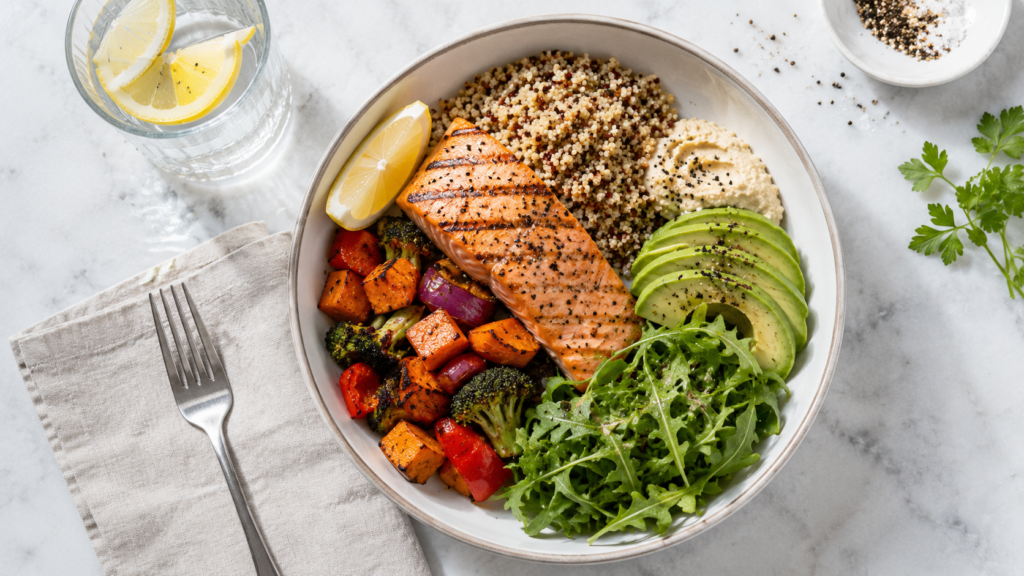
Grilled salmon or lentil bowl with quinoa, roasted vegetables, olive oil, and leafy greens
Why it works:
- Protein for muscle and fullness
- Fiber-rich carbs for steadier energy
- Nutrient density from vegetables
- Healthy fats from olive oil and fish or legumes
Snack
Apple with peanut butter or a boiled egg with fruit
Why it works:
- Helps bridge the afternoon without a blood sugar crash
- Combines carbs with protein or fat
Dinner
Chicken, tofu, or beans with sweet potato and sautéed vegetables
Why it works:
- Balanced meal structure
- Supports recovery and satiety
- Easier to repeat than trendy “detox” meals
Drinks
Water through the day, coffee earlier rather than later, fewer sugary drinks

How to Improve Vitality and Energy Through Nutrition After 40
This deserves its own section because after 40, “just wing it” usually gets more expensive.
Muscle mass and function can decline with age, and older adults benefit from muscle-supportive habits like adequate protein and regular strength-building activity.
The NIA notes that strength training helps maintain muscle mass and mobility as we age.
So after 40, it makes sense to get more intentional about:
- Protein at each meal
- Regular movement and strength work
- Hydration
- Better sleep
- Screening persistent fatigue instead of ignoring it
- Reducing added sugars and liquid sugar calories
- Eating enough to support muscle, hormones, and energy
This is not about becoming rigid. It is about becoming wise.
And because I have worked with the elderly, I feel this strongly: the quality of later life is often shaped by what looks “small” in midlife.
Food choices, muscle maintenance, hydration, sleep, and daily rhythm compound over time. That is why this conversation is not vanity-based for me. It is function-based. Dignity-based. Longevity-based.

Final Thoughts
If we really want to understand How to Improve Vitality and Energy Through Nutrition, we have to stop thinking like people looking for a shortcut and start thinking like people building a life.
Vitality is usually not lost in one dramatic moment. It is worn down through repeated neglect, under-fueling, poor hydration, low-quality food choices, overuse of stimulants, and the belief that we can override our body indefinitely.
But the opposite is also true: energy is often rebuilt through repeated nourishment, wise structure, better rhythm, and disciplined care.
That is the hopeful part. We do not need to become extreme. We need to become consistent. We need meals that contain real protein, fiber-rich carbs, quality fats, and enough food.
We need to notice when our body is asking for water, rest, or more support. We need to challenge the lie that depletion is just part of being busy, aging, or responsible.
I believe this deeply: taking care of the body is not vanity. It is stewardship. It is wisdom. It is dignity in practice.
And if we begin there, we can stop chasing fake energy and start building real vitality.
FAQ’s

Patricia Patterson is a lifestyle strategist helping women build discipline lives rooted in God in their faith, lifestyle, wellness and finance. Through Flamboyannt Wellness, she shares, wellness and lifestyle guidance and tools to help women and individuals navigate aging well with strength and vitality.